 Travel Guide
Desert Wildlife Spotting Guide: Species You Can See on a Conservation Safari
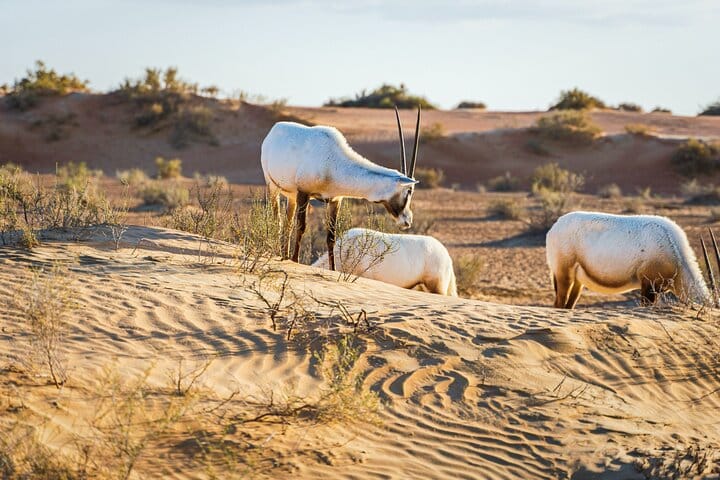
Far from being barren, the sands of Dubai are teeming with life uniquely adapted to arid extremes. Thanks to visionary royal conservation programs over the past three decades, thousands of square kilometers of pristine desert have been cordoned off, allowing once-threatened Arabian wildlife to stage a remarkable recovery. Key Takeaways & Wildlife Highlights The crown jewel of desert fauna is the Arabian Oryx—rescued from near-extinction in the 1970s and now roaming freely in herds across the Dubai Desert Conservation Reserve. Visitors on morning and evening nature drives frequently spot Arabian Sand Gazelles, Arabian Red Foxes, Spiny-Tailed Lizards (Dhub), and Pharaoh Eagle-Owls. The best wildlife viewing occurs between 06:00 AM – 08:00 AM and 17:00 PM – 18:30 PM around desert lakes and native Ghaf tree groves. For high-probability sightings, book our dedicated Al Marmoom reserve expedition led by professional nature guides equipped with field optics. Discover our broad variety of Dubai desert adventures across all wildlife sanctuaries. The Arabian Oryx: The Legend of the Unicorn With its luminous white coat reflecting desert heat and its long, straight spear-like horns that appear as one from profile view, the Arabian Oryx (Al Maha) is widely believed to have inspired the mythological unicorn. Oryx can detect distant rainfall across dozens of kilometers and survive weeks without open water by extracting moisture from succulent roots. Today, Dubai reserves protect over 800 healthy Arabian Oryx, frequently photographed grazing in small bachelor herds during early morning safaris. Native Arabian Wildlife Spotting Matrix Species Name Habitat Type Peak Activity Window Rarity / Conservation Status Arabian Oryx (Oryx leucoryx) Gravel plains & interdunal depressions Dawn (06:00 – 08:00 AM) Vulnerable (Recovered from wild extinction) Arabian Sand Gazelle (Reem) Deep red sand dunes & Ghaf thickets Golden Hour (17:00 – 18:30 PM) Common in protected reserves Arabian Red Fox (Al Tha'lab) Rocky outcrops & camp perimeters Night (21:00 PM – 03:00 AM) Uncommon (Nocturnal hunter) Spiny-Tailed Lizard (Dhub) Hard packed sabkha & limestone burrows Midday sun (11:00 AM – 14:00 PM) Vulnerable (Protected under UAE law) Pharaoh Eagle-Owl Rocky canyon faces (Fossil Rock) Dusk & midnight Rare (Secretive nocturnal raptor) Gazelles of the Dunes: The Nimble Reem and Idmi Dubai is home to two distinct gazelle species: the pale, sand-colored Arabian Sand Gazelle (Reem) and the smaller, darker Mountain Gazelle (Idmi). Weighing just 15 to 20 kilograms, these lithe herbivores can leap over 2 meters high and sustain running speeds of 60 km/h across soft dune faces. Learn how to select conservation operators that respect animal buffer zones in our guide on choosing an eco-friendly desert operator. [tours codes="AUT-DS-08,AUT-DS-14,AUT-DS-21"] Nocturnal Desert Creatures: Life After Sunset When the sun sets and desert temperatures cool down, a fascinating nocturnal ecosystem emerges. Desert hedgehogs forage for beetles, gecko species leave daytime burrows, and the elusive Sand Cat (Felis margarita) hunts small gerbils with padded paws that leave no footprints. Guests staying on an overnight safari can join a guided UV-light scorpion walk to watch desert scorpions glow electric fluorescent green under blacklight. For photography tips on capturing night creatures and constellations, consult our manual on desert astrophotography and golden hour settings. Birdwatching in Desert Wetland Sanctuaries At the Al Qudra and Al Marmoom desert lakes, over 170 bird species congregate along global migratory flyways. Binocular-equipped guests frequently spot Greater Flamingos, Steppe Eagles, Grey Herons, and Black-winged Stilts feeding in the shallows. Book your wildlife encounter on our falconry and raptor safari encounter to view these majestic desert hunters up close.