Travel update

Dubai is open and welcoming visitors as normal. · Book today with free cancellation up to 24 hours before your trip.

Navigation
Dubai Desert Guides
MAGAZINE & GUIDES

Stories, Tips & Travel Guides

Insider recommendations, desert packing guides, and curated UAE itineraries written by local safari guides and destination planners.

The Ultimate Guide to Desert Safaris in Dubai: Planning, Costs, & Inclusions
Travel Guide
Aug 28, 2026 5 min read

The Ultimate Guide to Desert Safaris in Dubai: Planning, Costs, & Inclusions

A desert safari across Dubai's sweeping sand dunes is universally celebrated as the United Arab Emirates' quintessential travel experience. Yet with dozens of operators, four distinct dayparts, and a vast spectrum of vehicles, selecting the exact itinerary suited to your travel style requires careful preparation. Executive Summary & Key Takeaways Dubai desert safaris range from AED 130 budget tours up to AED 800+ ultra-luxury private retreats. Morning tours prioritize crisp desert air and high-adrenaline motorsports; evening excursions feature sunset photo-ops, live cultural performances, and BBQ buffets; overnight glamping caters to stargazers. Before booking, always verify whether your package includes high-dune Lahbab red sand bashing or gentle desert conservation reserve transit. Whether you seek high-octane sand drifting or tranquil Bedouin astronomy, our central Dubai desert safari collection encompasses all operational styles. Below, we break down every dimension of your desert journey, connecting you to our detailed topic cluster guides. Understanding Desert Safari Types: Schedules & Ambience Dubai desert excursions operate across three core schedules: early morning, afternoon-to-evening, and overnight. Your choice hinges on whether your priority is sports photography, cultural dining, or uninterrupted night sky views. Morning safaris typically commence with 06:00 AM hotel pickups, arriving in the dunes before peak surface heat sets in. Conversely, our popular evening desert safari with BBQ dinner launches at 14:30 PM, integrating sunset photography, camel treks, and atmospheric stage shows. For an in-depth time-of-day comparison detailing weather fluctuations and camp shows, review our dedicated guide on morning vs evening vs overnight desert safaris. Master Schedule & Activity Comparison Safari Format Typical Timing Core Highlights Dining & Camp Shows Price Range (AED) Morning Safari 06:00 AM – 10:30 AM Sunrise dune drift, sandboarding, 350cc quad biking Light breakfast / refreshments only; no shows AED 150 – 250 Evening Safari 14:30 PM – 21:30 PM Lahbab 45-min dune bash, sunset stop, camel ride, shisha Full 3-course BBQ buffet, Tanoura & fire shows AED 130 – 350 Private VIP Safari 14:30 PM – 21:30 PM Dedicated Land Cruiser, private dune trail, personal guide Exclusive table service, premium live grill, waitstaff AED 699 – 850 Overnight Glamping 14:30 PM – 08:30 AM (+1) Sunset safari, midnight stargazing, sunrise breakfast Dinner BBQ + hot morning Arabian breakfast AED 300 – 799 Choosing Your Thrill: Vehicles & Dune Mechanics The terrain dictates the vehicle. Professional tour drivers utilize modified Toyota Land Cruisers with tyres deflated from 35 PSI down to 14–16 PSI to maximize the contact patch across soft Lahbab crests. Travelers wanting direct driver control frequently pair classic bashing with a dedicated high-performance dune buggy tour or an open-desert quad bike ATV session. Buggies feature FIA-approved tubular roll cages and 4-point harnesses, making them significantly safer than open-handlebar quad bikes. Learn more about mechanical handling, engine power, and age limits in our breakdown of dune buggies vs quad bikes vs 4x4 dune bashing. [tours codes="AUT-DS-01,AUT-DS-02,AUT-DS-12"] Pricing Transparency: Budget vs. Standard vs. VIP Tiers Not all desert camps are created equal. Budget safaris priced below AED 100 frequently cut corners by utilizing 30-passenger buses for highway transit and cramming up to 600 visitors into high-density commercial camps. Conversely, our curated VIP desert safari with reserved seating ensures direct 4x4 hotel transfers, dedicated dining pavilions, and personalized waiter service. Read our full financial inspection on budget vs standard vs luxury private desert safaris to see where every dirham goes. Health, Safety, & Specialized Family Considerations Dune bashing involves aggressive centrifugal forces, steep drops, and sudden vertical accelerations. While thrilling for most adults, sensitive passengers need sensible precautions. To keep nausea at bay, read our practical medical advice on avoiding motion sickness during dune bashing. If traveling with infants, pregnant mothers, or elderly grandparents, skip rough dune bashing entirely and book a gentle desert safari without dune bashing. For age-by-age parameters, explore our detailed manual on desert safaris with babies, toddlers, and seniors. Cultural Heritage & Conservation Reserve Safaris Beyond modern motorsport lies centuries of Bedouin tradition. Heritage safaris prioritize peaceful wildlife tracking in the Dubai Desert Conservation Reserve (DDCR) and the Al Marmoom Desert Reserve. On these eco-conscious excursions, you can observe wild Arabian Oryx herds, learn ancient hunting falconry, and savour authentic Emirati slow-cooked majboos. Explore these topics further in our deep-dive articles on authentic Bedouin heritage behind desert safaris and our field guide to desert wildlife species you can spot in Dubai. [tours codes="AUT-DS-08,AUT-DS-14,AUT-DS-21"] Preparation Checklist: Seasonal Packing & Photography Desert temperatures fluctuate radically between day and night. Mid-winter afternoons average a comfortable 24°C, but desert midnight temperatures can plummet to 13°C, necessitating warm layering. Check our seasonal packing checklist in the ultimate desert safari packing and dress code guide, and master manual camera settings with our guide on how to shoot golden hour and astrophotography in the desert. Summary: How to Reserve Your Ideal Dubai Desert Safari Selecting your perfect desert tour comes down to vehicle preference, scheduling, and comfort standards. Ready to reserve? Browse our real-time availability across all Dubai desert safari tour options or contact our reservations desk for custom private group itineraries.
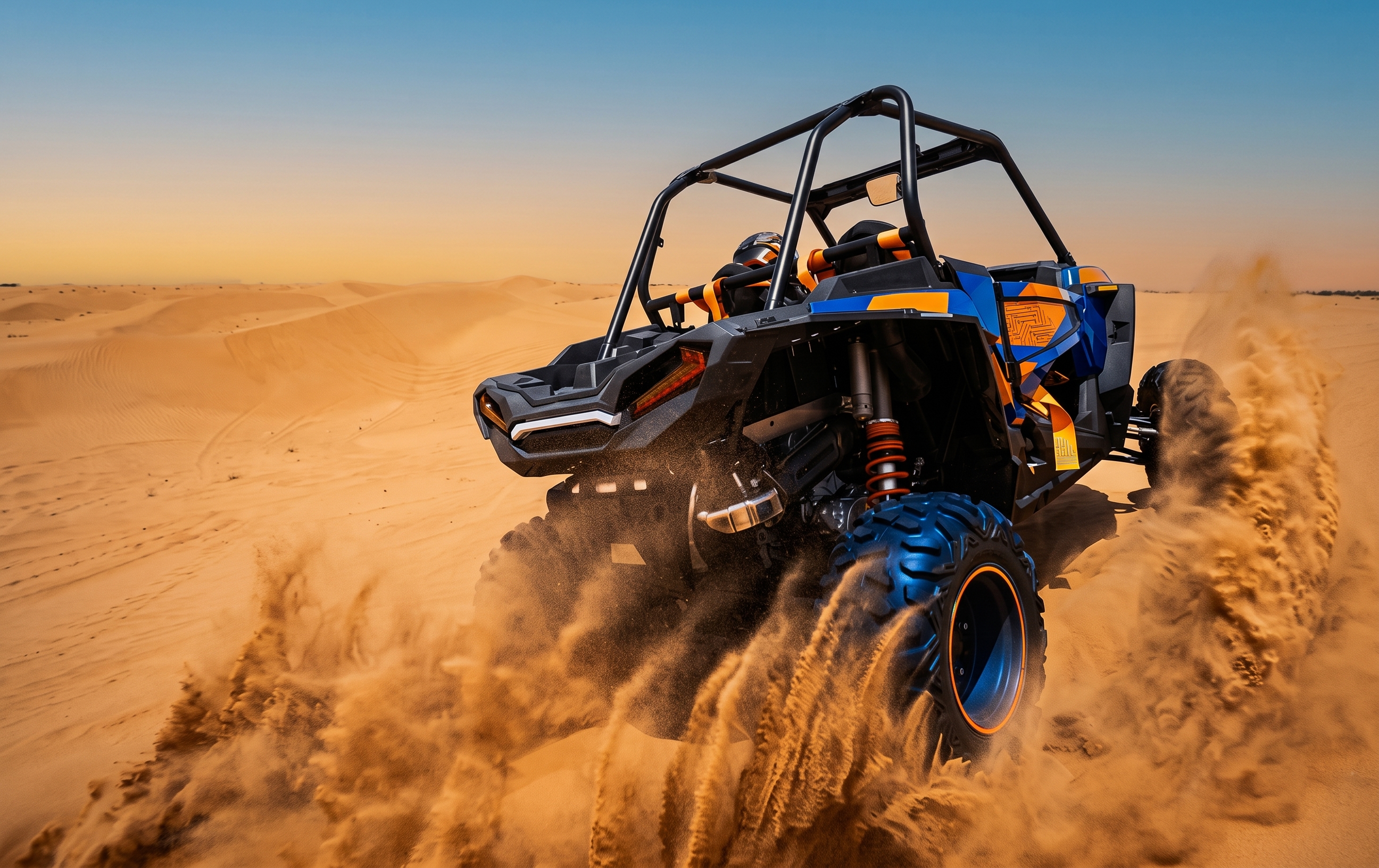
Morning vs. Evening vs. Overnight Safaris: Which Desert Adventure Is Right for You?
Travel Guide
Aug 29, 2026 5 min read

Morning vs. Evening vs. Overnight Safaris: Which Desert Adventure Is Right for You?

Choosing between a morning, evening, or overnight desert safari is the single most important decision when planning your Dubai dune adventure. Each time slot offers a completely distinct experience, catering to different energy levels, temperature tolerances, and travel schedules. Quick Answer & Key Takeaways Choose a morning safari if you have limited transit time, prefer cooler desert sand, and want pure motorsport action like sandboarding and quad biking without live shows. Select an evening safari for the classic Dubai experience with golden-hour sunsets, a 3-course BBQ feast, and cultural belly dance and Tanoura performances. Opt for an overnight safari if you want peaceful midnight stargazing and dawn sunrise over untouched dunes. All three formats are available directly through our central Dubai desert safari hub. Before you book, review our companion guides on desert safari dress code and seasonal packing as well as our practical dune bashing motion sickness survival manual to ensure a comfortable trip. Operational Timelines & Atmospheric Comparisons Morning safaris kick off bright and early with 06:00 AM hotel pickups, delivering you to the Lahbab Red Dunes by 07:15 AM when the sun is still low and shadows create dramatic sand crests. The tour wraps up by 10:30 AM, leaving your entire afternoon free for city exploration. Evening tours depart between 14:30 PM and 15:15 PM, timing your off-road bashing for the golden hour between 17:00 PM and 18:15 PM. You then transition into our atmospheric desert camp for dining and performances until 21:30 PM. For guests choosing the extended adventure, our stargazing overnight desert safari continues well past midnight, featuring private deluxe tents, campfire Arabian tea, and breakfast at 07:00 AM. Morning vs. Evening vs. Overnight Comparison Matrix Feature / Spec Morning Safari Evening Safari Overnight Safari Duration 4 to 4.5 Hours 6 to 7 Hours 17 to 18 Hours Summer Temperature 28°C to 34°C 36°C dropping to 30°C 26°C overnight low Winter Temperature 16°C to 22°C 22°C dropping to 16°C 12°C to 14°C overnight low Dune Bashing Session 30 to 45 Minutes 35 to 45 Minutes 35 to 45 Minutes Meal Inclusions Bottled water & light snacks Full 3-course BBQ buffet BBQ dinner + hot Arabian breakfast Live Camp Entertainment None (focus is on motorsports) Tanoura, Fire Show, Belly Dance Full evening shows + quiet acoustic night Average Base Price AED 200 AED 130 AED 300 Who Should Choose an Action-Packed Morning Safari? The morning itinerary is engineered for travelers with tight itineraries, cruise passengers docked for half-day shore excursions, and fitness enthusiasts. Because desert sands remain firm before midday heat causes thermal expansion, morning sandboarding offers significantly faster glides down slip-faces. You can reserve our dedicated morning desert safari with sandboarding for an adrenaline-focused morning that returns you to your downtown hotel in time for lunch. [tours codes="AUT-DS-01,AUT-DS-02,AUT-DS-03"] Who Should Book the Classic Evening Desert Safari? If you are visiting Dubai for the first time, the evening itinerary provides the complete cultural immersion package. The transition from intense high-dune drifting to a serene sunset photo stop on top of a 300-foot red dune is breathtaking. At our Bedouin-inspired camp, guests enjoy henna body painting, traditional falcon photography, aromatic shisha lounges, and unlimited grilled kebabs under the stars. Secure your seats on our popular classic evening desert safari with live BBQ. Who Should Experience the Stargazing Overnight Retreat? Once the evening tour buses depart around 21:30 PM, an extraordinary hush descends across the desert. Camping overnight allows you to escape light pollution and experience true desert wilderness. Guests receive private mattress setups or climate-controlled glamping domes, waking up to the aroma of freshly brewed gahwa (Arabic coffee) and crisp desert birdsong. Check out our comprehensive guide on how to shoot golden hour and astrophotography in the desert to capture the constellations. Final Decision Framework To summarize: Pick morning for sports and rapid schedules; pick evening for iconic family entertainment and feasts; pick overnight for silence, astronomy, and romantic escapism. Browse all options across our desert safari catalog to lock in your preferred dates.

Dune Buggy vs. Quad Biking vs. 4x4 Dune Bashing: Which Vehicle Suits Your Thrill Level?
Travel Guide
Aug 30, 2026 5 min read

Dune Buggy vs. Quad Biking vs. 4x4 Dune Bashing: Which Vehicle Suits Your Thrill Level?

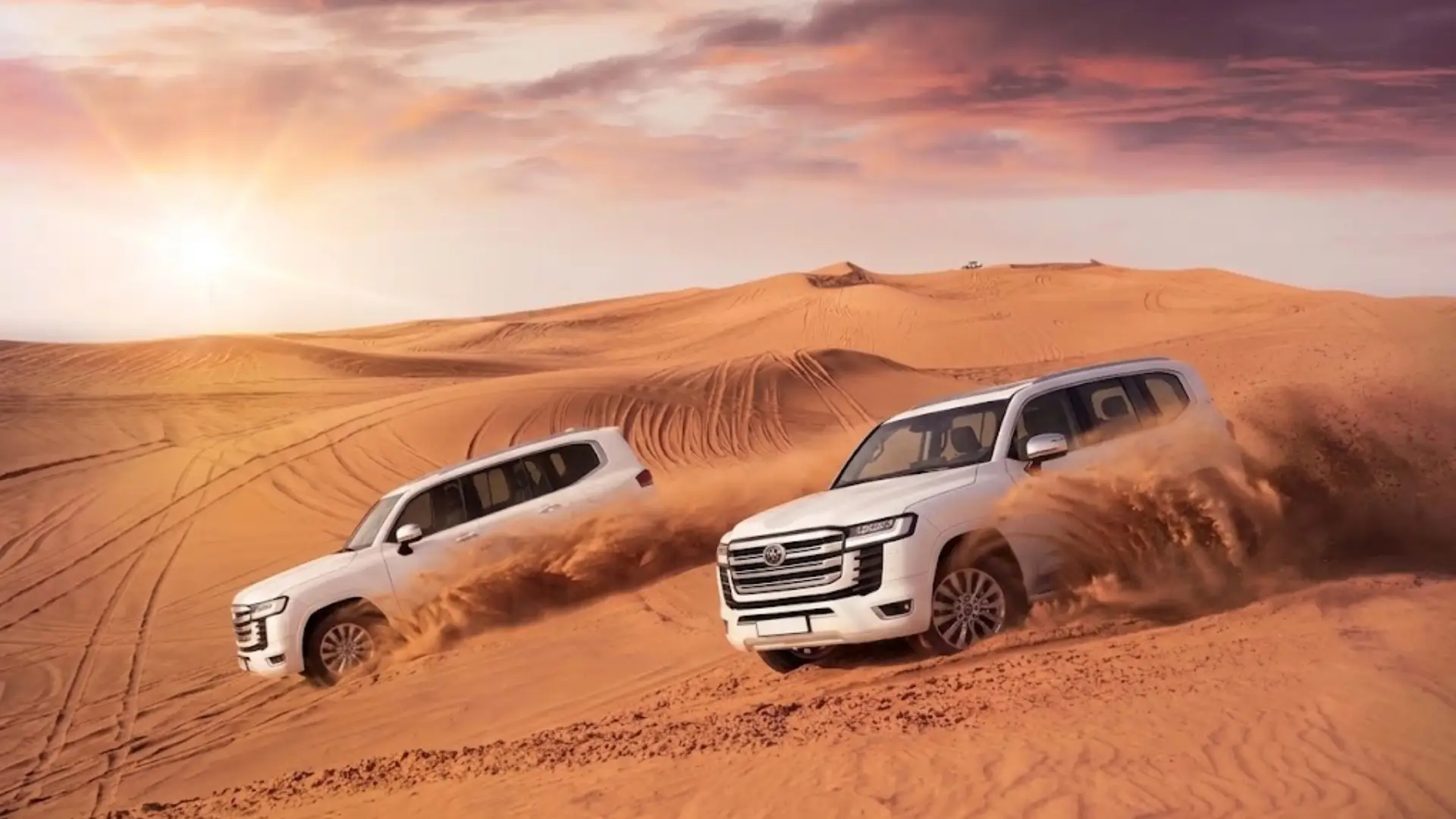
The Dubai desert is one of the world's greatest off-road proving grounds, featuring razorback dunes reaching over 300 feet in vertical height. Choosing how you conquer these dunes—whether by driving a custom buggy, straddling an ATV quad bike, or riding shotgun in a modified 4x4—determines your adrenaline level and safety profile. Direct Answer & Key Takeaways Dune buggies (800cc–1000cc) deliver the highest performance with automotive steering, race seats, and tubular roll cages, making them the safest high-speed self-drive option. Quad bikes (250cc–400cc) offer physical, motorcycle-style riding with handlebar throttle controls suited for open circle tracks. 4x4 Land Cruisers provide maximum comfort where a licensed desert master drives while you enjoy roller-coaster dune drifting in air-conditioned comfort. Every option has distinct physical requirements and age thresholds. Explore our full fleet of desert safari off-road experiences to match your group's profile. If anyone in your party suffers from inner-ear equilibrium sensitivity, read our companion guide on motion sickness prevention strategies during desert safaris before selecting high-intensity bashing. Vehicle Engineering & Mechanical Specifications Dune buggies utilized in Dubai, such as the Polaris RZR XP 1000 and Can-Am Maverick X3, are purpose-built racing chassis equipped with long-travel Fox suspension, beadlock off-road tyres, and continuous variable transmissions (CVT). Drivers operate conventional gas and brake pedals protected by full 4-point harness seatbelts. Quad bikes (ATVs) like the Yamaha Grizzly 350cc utilize straddle seating with thumb-throttle levers and high centers of gravity. Riders must actively shift their body weight into corners to counterbalance the vehicle on dune faces, demanding greater physical upper-body exertion. In 4x4 dune bashing, commercial operators use reinforced Toyota Land Cruiser 300 Series or Nissan Patrol V8s fitted with internal safety roll cages, heavy-duty skid plates, and tyres deflated to 14–16 PSI to float over loose powder sand. Vehicle Specifications & Thrill Matrix Specification Dune Buggy (Can-Am / Polaris) Quad Bike (ATV) 4x4 Land Cruiser Bashing Engine Displacement 800cc – 1000cc Turbo 250cc – 400cc 3.5L V6 Turbo / 4.0L V6 Driver Control 100% Self-Drive (Steering wheel) 100% Self-Drive (Handlebars) Professional Driver (Passenger only) Safety Protection Tubular steel cage + 4-point harness Helmet + Goggles (Open straddle) Factory chassis + internal roll cage Minimum Driving Age 16+ Years (No license required) 16+ Years (Kids bikes: 12+) Passenger: 3+ Years Physical Demand Moderate (Power steering assisted) High (Active body leaning required) Low (Hold-on grips only) Starting Rental Price AED 599 per vehicle AED 250 per rider Included in standard tour (AED 130) When to Rent a Self-Drive Dune Buggy If you crave total command over 170+ horsepower machine tackling 50-degree slip-faces, buggies represent the gold standard. Guided by an expert convoy leader who scout safe entry lines, you pilot through technical bowl formations without worrying about flipping thanks to the wide stance. Book a dedicated high-power dune buggy safari rental available in 1-seater, 2-seater, or 4-seater family configurations. If you are comparing luxury private vehicle options, also see our report on budget vs luxury private desert safaris. [tours codes="AUT-DS-12,AUT-DS-11,AUT-DE-698"] When Quad Biking Is Your Best Choice Quad biking provides an agile, raw connection to the desert sand. Most tourists opt for quad biking inside a secure, fenced 10,000-square-meter natural sand arena before heading to the open dunes, making it ideal for casual riders wanting 30 minutes of excitement. You can add an open-desert quad session to your morning or evening tour via our open-desert quad bike ATV safari. When 4x4 Passenger Dune Bashing Wins If you are traveling with family members of differing physical fitness, passenger dune bashing in a Land Cruiser offers shared thrills without requiring driving skills. Experienced dune captains execute high-bank drifts and steep crest drops while you sit back in air-conditioned comfort. Experience high-grade sand drifting on our signature premium red dunes desert safari with BBQ dinner. Safety Regulations & Insurance Protocol All motorsports participants receive mandatory briefings covering convoy spacing, flag-pole safety whips, and helmet securement. Never overtake your convoy leader, and always maintain at least 15 meters of distance between vehicles to avoid sand roost blindness.

Budget, Standard, or Ultra-Luxury Private Desert Safaris: What Are You Actually Paying For?
Travel Guide
Aug 31, 2026 5 min read

Budget, Standard, or Ultra-Luxury Private Desert Safaris: What Are You Actually Paying For?

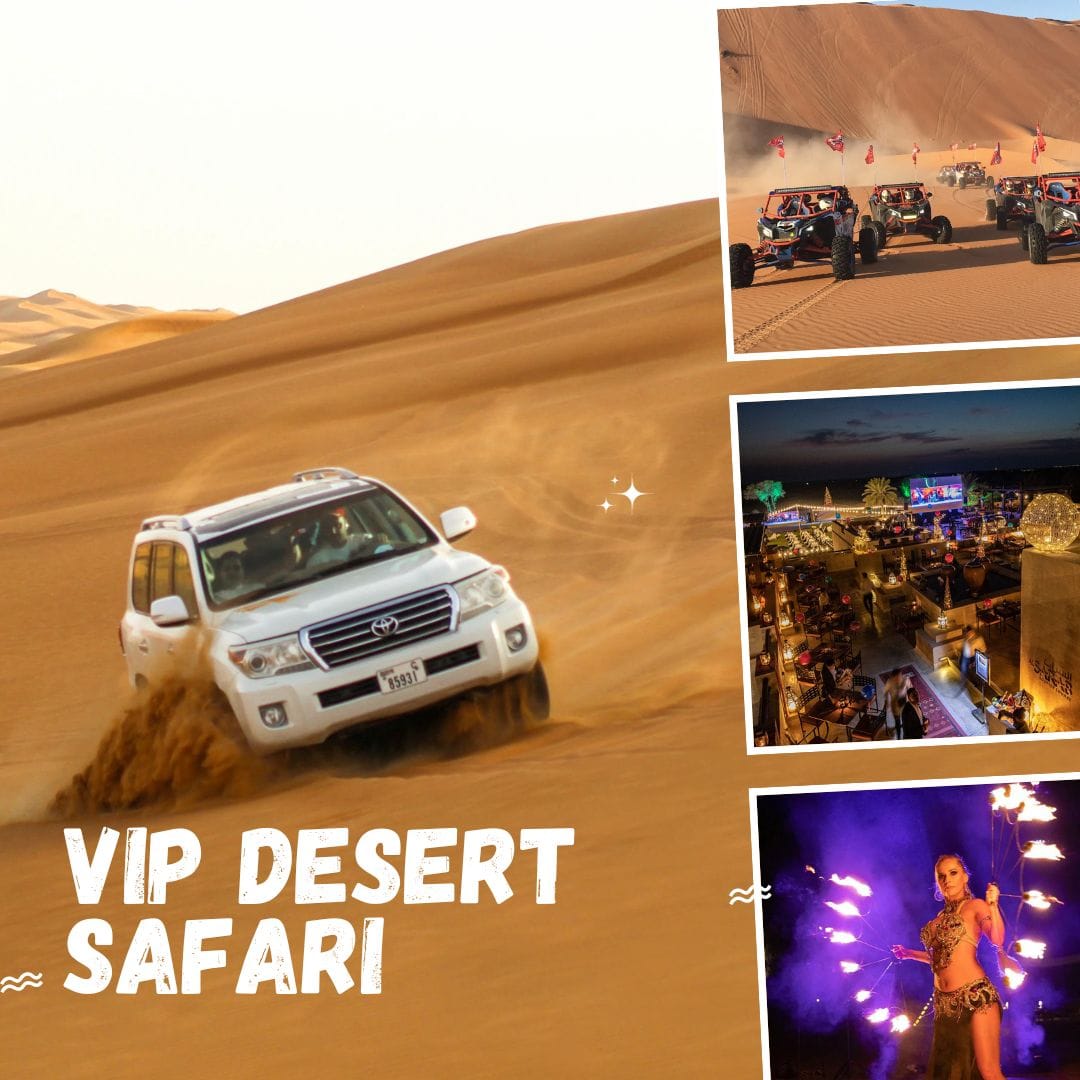
With Dubai desert safari prices spanning from AED 75 street kiosks to AED 1,200 VIP luxury suites, travelers frequently struggle to decipher what makes one tour worth ten times the price of another. The difference is rarely the sand itself—it lies in transfer logistics, camp density, culinary curation, and exclusivity. Quick Answer & Reality Check Budget safaris (AED 75–120) rely on shared 30-passenger buses, mass-scale camps hosting up to 800 people, long self-service food queues, and aggressive sales pitches. Standard 4x4 safaris (AED 130–250) provide door-to-door hotel pickup in a Land Cruiser, high-dune Lahbab bashing, and full evening shows with a 3-course BBQ buffet. Ultra-luxury private safaris (AED 699–1,200) feature dedicated luxury vehicles, private oasis seating, gourmet table-served dining, and five-star restroom suites. Understanding these tier distinctions prevents the disappointment of expecting a serene desert oasis only to arrive at an overcrowded commercial bazaar. Browse our handpicked curated desert safari packages to compare verified operator tiers. If you are planning a milestone anniversary or proposal, consider our bespoke guide on planning private desert dinners and proposals. The Hidden Mechanics Behind Dubai Safari Pricing Tour pricing is governed by three major cost centers: vehicle fuel and depreciation, desert campsite licensing fees, and catering quality. Cheap operators minimize expenses by grouping passengers from up to 8 different hotels into a single minibus, extending transit times by up to two hours before reaching the desert. In contrast, standard and luxury bookings secure a dedicated 4x4 vehicle that drives directly on the highway to Lahbab or the Dubai Desert Conservation Reserve, saving you up to 90 minutes of wasted transit. For guests seeking private comfort, our dedicated private car desert safari guarantees an exclusive Land Cruiser solely for your party with customized music, route pacing, and photo halts. Comprehensive Tier-by-Tier Comparison Operational Metric Budget Tier (Under AED 120) Standard Tier (AED 130 – 250) Ultra-Luxury VIP (AED 699+) Transfer Vehicle Shared coaster bus to desert depot Shared 4x4 Land Cruiser (6 pax) Private Land Cruiser / Defender Camp Guest Density 500 to 900 Guests 150 to 300 Guests 30 to 60 Guests (or private dune) Dune Bashing Territory Low dunes / road perimeter High Red Dunes (Lahbab) Private Conservation Reserve Dining Service Self-service cafeteria queue Multi-station BBQ buffet Silver-service personal table waitstaff Beverages & Shisha Basic soft drinks; extra fees Unlimited tea, coffee, sodas Premium mocktails, private shisha Restroom Facilities Portable cabin units Permanent tiled washrooms Air-conditioned luxury suites The Budget Trap: Where Corner-Cutting Happens Budget safaris frequently surprise guests with hidden add-ons. You may find that sandboarding, quad bike trials, or photos with falcons carry inflated surcharges once inside the camp gates. Additionally, buffet lines at mass-capacity camps can exceed 150 people, meaning you spend valuable entertainment time standing in line rather than relaxing under the desert stars. [tours codes="AUT-DS-02,AUT-DS-04,AUT-DS-05"] The Standard Tier: The Sweet Spot for Value For 85% of international holidaymakers, standard safaris represent the optimal balance of authentic thrill and economic value. You receive reliable 4x4 transfers, a genuine 45-minute red dune bashing session, camel rides, and stage-side carpeted seating. Our flagship premium red dunes desert safari with BBQ dinner exemplifies this category, offering five-star hospitality without luxury markups. The VIP and Ultra-Luxury Experience: Unmatched Serenity Ultra-luxury safaris replace noisy commercial camps with candlelit desert sanctuaries. Guests dine on tender grilled lamb chops, tiger prawns, and gourmet Arabian mezze served course-by-course directly to their private majlis table. Elevate your journey by booking the VIP desert safari package with table service or indulging in our romantic couples desert safari experience.

The Ultimate Desert Safari Packing & Dress Code Guide (By Season)
Travel Guide
Sep 01, 2026 5 min read

The Ultimate Desert Safari Packing & Dress Code Guide (By Season)

Packing appropriately for a Dubai desert safari requires balancing sun defense, physical comfort during rugged sports, and cultural respect. The Arabian desert experiences radical thermal swings, shifting from scorching daytime highs to crisp, windy nighttime breezes in a matter of hours. Key Takeaways & Quick Wardrobe Rules Wear loose-fitting, breathable linen or cotton garments in light neutral tones (beige, khaki, cream) to deflect solar radiation. In summer (May–September), prioritize UV sunglasses, SPF 50+ sunscreen, and wide-brim hats. In winter (November–March), always pack an evening fleece jacket or windbreaker as open desert night temperatures drop to 12°C–15°C. Wear closed-toe slip-on shoes or strap-on trekking sandals—avoid flip-flops that slip off in deep dune sand. Reviewing our essential desert safari activities helps align your wardrobe with planned sports. Skimmers preparing camera kits should also cross-reference our guide on golden hour photography camera settings to ensure lenses are shielded against fine quartz dust particles. Seasonal Weather Profiles in the Dubai Desert The UAE has two dominant seasons: a pleasant, temperate winter and an intense arid summer. In winter afternoons, the sand reaches a pleasant 24°C to 26°C, ideal for walking barefoot on ridge crests. In summer, surface sand temperatures can exceed 55°C at 14:00 PM, making direct contact dangerous without proper footwear. For full schedule details across both seasons, see our seasonal breakdown in morning vs evening temperature considerations. Seasonal Packing & Wardrobe Matrix Category Winter Safari (Nov – Apr) Summer Safari (May – Oct) Daytime Attire Long cotton trousers, polo or long-sleeve linen shirt Ultra-lightweight loose shirts, breathable cargo shorts Evening Layering Medium jacket, fleece hoodie, pashmina shawl No heavy layers required; light cardigan for AC bus Recommended Footwear Breathable sneakers or trail sandals with heel strap Enclosed canvas shoes (protects against hot sand) Sun & Dust Gear Polarized sunglasses, cotton shemagh headscarf UV400 sunglasses, mineral sunscreen SPF 50+, hydration mist Tech Protection Camera bag with sealed zips, lens blower Waterproof/dustproof phone pouch, power bank Footwear Rules: Why Flip-Flops Fail on the Dunes The most common tourist wardrobe mistake is wearing loose flip-flops or expensive luxury sliders. When sandboarding down steep red dunes, loose slides immediately sink into soft quartz powder, leaving you stranded or tripping down the slope. Opt instead for strap-secured sandals or lightweight sneakers. Once inside the carpeted desert camp, you can comfortably slip your shoes off to walk across clean Persian rugs. [tours codes="AUT-DE-698,AUT-DS-01,AUT-DS-02"] Cultural Etiquette & Modesty Guidelines While desert camps cater to international visitors and permit standard holiday clothing, modest dress is appreciated across the UAE. Avoid excessively revealing beachwear or sheer fabrics. T-shirts, knee-length shorts, midi-dresses, and linen trousers are completely acceptable and offer the added practical benefit of protecting your skin against abrasive sand grains during strong winds. Essential Gear for Your Daypack We recommend bringing a compact 15-liter daypack containing eye drops (to rinse windblown sand), hand sanitizer, a compact power bank (cold desert nights drain smartphone batteries quickly), and a traditional cotton ghutra or scarf to protect your face during dune activities. Book your upcoming adventure on our premium red dunes desert safari with BBQ dinner with confidence knowing you are dressed for every condition.

How to Avoid Motion Sickness During Dune Bashing: A Survival Manual
Travel Guide
Sep 02, 2026 5 min read

How to Avoid Motion Sickness During Dune Bashing: A Survival Manual

Dune bashing across Dubai's sweeping Lahbab dunes is exhilarating, frequently compared to an off-road roller coaster. However, the continuous succession of 40-degree lateral slides, cresting drops, and variable centrifugal accelerations can challenge the inner ear equilibrium of even seasoned travelers. Direct Answer & Survival Action Plan To prevent motion sickness, consume a light meal 2 to 3 hours prior to pickup—never board a 4x4 on a completely empty or heavily bloated stomach. Always request the front passenger seat next to the driver to keep your eyes locked on the horizon. Take an over-the-counter antihistamine (such as Dimenhydrinate or Meclizine) 45 minutes before heading into the dunes, or wear acupressure wristbands targeting the P6 Nei-Kuan pressure point. If you or a family member has severe vestibular sensitivity, skip high-dune drifting altogether and reserve our tranquil gentle desert safari without dune bashing. Review our complete overview of Dubai desert safari tours to identify itineraries with tranquil transit. The Physiology of Dune Bashing Nausea Motion sickness (kinetosis) occurs when there is a mismatch between your visual system and your inner ear vestibular canals. Inside a 4x4, your eyes may register a stable car interior while your vestibular system senses violent lateral banking, causing your brain to trigger nausea. Drivers constantly modulate throttle and brake inputs while steering along razorback ridges. For travelers with toddlers or elderly parents, read our multi-generational safety guide on desert safaris with toddlers and seniors. Vehicle Seating & Motion Impact Matrix Seat Location Motion Intensity Horizon Visibility Suitability for Sensitive Guests Front Passenger Seat Lowest (Center of vehicle pitch) 100% Unobstructed forward view Highly Recommended (Best stability) Middle Row (Left/Right) Moderate lateral swing Good side & angled front visibility Acceptable with anti-nausea medication Middle Row (Center Seat) Moderate to High Restricted view through front headrests Not Recommended for nausea-prone guests Third Row / Rear Trunk Maximum (Over rear axle leverage) Poor (Small side windows only) Avoid completely if sensitive Pre-Tour Meal Strategy: What to Eat and Avoid Never embark on a safari after a heavy hotel buffet. Fatty, greasy, or dairy-heavy foods digest slowly and sit heavily in the stomach, dramatically accelerating nausea symptoms once the vehicle begins pitching. Opt instead for simple carbohydrates like toast, crackers, or a banana washed down with flat water or ginger tea. Avoid acidic citrus juices and carbonated sodas for at least 3 hours prior to departure. [tours codes="AUT-DS-18,AUT-DE-698,AUT-DS-12"] Communication With Your Desert Marshal Our licensed desert safari drivers are trained professionals who take pride in guest safety and satisfaction. If you begin feeling uneasy, speak up immediately: "Please slow down, I am feeling slightly dizzy." Drivers can immediately tone down the driving intensity, transition to flat camel trails, or pull onto a flat sand plateau to let you step out, breathe cool desert air, and ground your equilibrium on solid terrain. Alternative Self-Drive & Mild Options If you prefer complete control over the throttle to avoid unexpected drops, consider our dune buggy self-drive alternative where your own hands govern acceleration and steering.

Desert Safari with Babies, Toddlers, and Seniors: What Is Safe and What to Skip?
Travel Guide
Sep 03, 2026 5 min read

Desert Safari with Babies, Toddlers, and Seniors: What Is Safe and What to Skip?

A desert safari is often the highlight of a family vacation to Dubai, but multi-generational groups traveling with infants, active toddlers, pregnant women, or elderly grandparents face unique safety constraints. Knowing which elements are safe and which must be strictly avoided is critical for family well-being. Direct Answer & Mandatory Safety Rules Children under 3 years, pregnant women, and seniors with chronic back, neck, or cardiac conditions are legally prohibited from participating in 4x4 dune bashing by Dubai DTCM regulations. However, families can still enjoy the desert by booking a private car that bypasses rough dunes via paved and flat sand access roads, driving directly to the Bedouin cultural camp for camel rides, falconry, and dinner shows. Our dedicated family-friendly desert safari with infants provides tailored private transport with approved child safety seats. Review our full complete desert safari portfolio to identify accessible family-friendly camps. Age-by-Age Safety Breakdown Babies under 24 months possess underdeveloped neck muscles incapable of supporting sudden whip-like deceleration forces during dune crest drops. Furthermore, child car seats cannot be safely anchored at the severe 45-degree tilt angles typical of high-dune drifting. For toddlers aged 3 to 5 years, dune bashing remains too physically intense, but they thoroughly enjoy sensory play in soft camp dunes, feeding camels, and watching colourful spinning Tanoura dancers. Review our companion guide on motion sickness prevention guidelines if your older kids are sensitive during transit. Family Safety & Activity Feasibility Matrix Activity Infants (0 – 2 Years) Toddlers (3 – 5 Years) Kids (6 – 12 Years) Seniors (60+ Years) High Dune Bashing Strictly Prohibited Strictly Prohibited Allowed (Parental discretion) Prohibited if history of back/heart issues Gentle Flat Desert Drive 100% Safe (Car seat required) 100% Safe 100% Safe 100% Safe & Scenic Camel Riding Hold in lap with parent (lap belt) Ride seated with parent Solo ride with handler supervision Recommended if mobility allows Sandboarding Not Allowed Sitting position on small rise Full standing slide with helmet Gentle seated slide or spectating Evening Camp Shows & BBQ Yes (High chairs available) Yes (High energy enjoyment) Yes (Interactive magic & fire shows) Yes (VIP raised sofa seating) The Solution: Private Vehicle Direct Camp Transit Booking a shared safari vehicle forces your family to compromise with other passengers who expect high-speed dune bashing. By choosing our dedicated private car desert safari, your driver tailors every minute to your family's pace. The driver takes smooth highway routes to the desert threshold, pauses for family photos on calm roadside dunes, and delivers you straight to the camp gates without a single bump. [tours codes="AUT-DS-19,AUT-DS-18,AUT-DS-04"] Comfort Accommodations for Senior Citizens For older travelers, standing in buffet lines or sitting on low ground carpets can cause significant knee and hip strain. Our upgraded camps feature raised dining tables and VIP sofa seating with dedicated waiter service. Seniors frequently rank the cultural demonstrations as the highlight of their Dubai holiday. Learn more about historical storytelling in our guide to cultural Bedouin camp experiences. Packing Checklist for Family Travel When traveling with young children, pack extra baby wipes, noise-canceling earmuffs (sound systems during evening fire shows can reach 85 decibels), hydration electrolyte sachets, and a warm evening jacket for cooler night desert breezes.

Beyond the Tourist Trail: The Authentic Bedouin Heritage Behind Desert Safaris
Travel Guide
Sep 04, 2026 5 min read

Beyond the Tourist Trail: The Authentic Bedouin Heritage Behind Desert Safaris

Before Dubai transformed into a glittering metropolis of futuristic skyscrapers, the Arabian desert was home to the Bedu (Bedouins)—a resourceful nomadic civilization that mastered survival across one of the planet's harshest environments. While modern safaris emphasize horsepower and spectacle, discovering genuine Bedouin customs offers profound cultural insight. Key Takeaways & Cultural Significance Traditional desert safaris trace historic Bedouin lifeways: Falconry was an essential winter hunting technique for capturing houbara bustards; camels provided milk, transport, and wool; gahwa (cardamom-infused coffee) and fresh dates established unyielding desert hospitality protocols. Choosing a heritage-focused safari allows you to experience authentic storytelling, star navigation, and ancestral culinary traditions far removed from commercial tourist shows. Travelers interested in living history can book our specialized traditional falconry safari experience or explore our eco-conscious Al Marmoom desert safari set within Dubai's largest unfenced conservation reserve. Compare all heritage packages in our Dubai desert safari collections. The Art & Significance of Emirati Falconry In the harsh desert winter, the Bedouin partnered with the Peregrine Falcon (Shaheen) and Saker Falcon to supplement their modest diets. Using intricate leather hoods (burqa) and feather lures (telwah), trainers formed deep bonds with these raptors before releasing them back into wild migration each spring. During modern heritage demonstrations, licensed Emirati falconers display high-speed swoops reaching over 200 km/h, illustrating why falconry is inscribed on UNESCO's Representative List of Intangible Cultural Heritage. Commercial Tourist Show vs. Authentic Heritage Safari Cultural Element Mass-Market Commercial Camp Authentic Bedouin Heritage Camp Falcon Interaction Quick photo prop on a glove (20 seconds) Full 45-minute aerodynamic flight demonstration Camel Experience 2-minute looped circle ride Guided 25-minute scenic caravan trek across dunes Hospitality Rituals Self-serve coffee urns Live roasting, mortar & pestle grinding, formal pouring Architecture & Seating Metal-framed stage with artificial lights Goat-hair tents (Bayt Al Sha'ar), flickering lanterns Culinary Heritage Standard catering sausages & fries Slow-cooked camel meat, lamb ouzi, freshly baked regag bread Gahwa & Dates: The Sacred Hospitality Code Desert survival depended on mutual aid between travelers. When entering a Bedouin majlis, guests are greeted with steaming dallah pots of gahwa—golden coffee brewed with cardamom, saffron, and cloves—accompanied by plump Khalas dates. Etiquette dictates holding your small finjan cup in your right hand. If you desire a refill, hold out the cup; if you are finished, gently shake the cup from side to side two or three times before handing it back to your host. [tours codes="AUT-DS-14,AUT-DS-08,AUT-DS-03"] Nomadic Navigation by the Desert Stars Without physical landmarks across shifting dunes, Bedouin wayfinders navigated vast trade corridors using the Al Thuraya (Pleiades) constellation and the North Star (Al Jadi). They read wind patterns on dune wave crests to determine seasonal water wells. Heritage overnight safaris frequently conclude with astronomy sessions detailing these ancient tracking techniques. For ethical travel recommendations, consult our guide on sustainable desert safari operator checklists, and familiarize yourself with regional fauna in our Arabian desert wildlife spotting guide. Preserving Living Heritage for Future Generations By participating in heritage-first tourism, visitors directly fund desert cultural foundations and artisans keeping traditional weaving (Sadu) alive. It is an unforgettable journey bridging Dubai's golden nomadic past with its visionary present.

Sustainable Desert Tourism: How to Choose an Eco-Friendly Safari Operator
Travel Guide
Sep 05, 2026 5 min read

Sustainable Desert Tourism: How to Choose an Eco-Friendly Safari Operator

The Arabian desert is frequently misperceived as an empty wasteland of sand. In truth, it is a delicate, hyper-fragile ecosystem supporting ancient flora, endangered endemic fauna, and fragile subterranean water tables. As annual tourist numbers swell past 17 million visitors, practicing sustainable desert tourism is vital to protect this biome. Direct Answer & Eco-Operator Checklist To guarantee an eco-friendly desert safari, choose operators permitted within protected conservation zones such as the Dubai Desert Conservation Reserve (DDCR) or Al Marmoom Reserve. Verify that the operator utilizes solar-powered camps, zero single-use plastics, strictly managed off-road tracks that avoid vegetative ghaf tree groves, and re-invests a portion of ticket proceeds directly into local wildlife rehabilitation. Our premier eco-conscious excursion, the Al Marmoom conservation reserve safari, operates in total harmony with regional conservation mandates. Discover our complete portfolio of responsible desert safari excursions across the Emirates. The Ecological Footprint of Unregulated Dune Bashing High-speed off-road motorsport causes measurable ecological strain if conducted carelessly. Heavy vehicles churning vegetation destroy shallow root structures of desert shrubs like the Arfaj and destabilize ancient sand crusts that take decades to form. Furthermore, engine noise disturbance can alter the foraging behaviors of nocturnal desert mammals. Learn how indigenous animals adapt in our detailed desert wildlife identification handbook. Conventional Operators vs. Certified Eco-Operators Operational Metric Conventional Mass Operator Certified Eco-Friendly Operator Location Unregulated public dunes / high-density strips Protected Conservation Reserve (DDCR / Al Marmoom) Dune Impact Unrestricted drifting over desert flora Designated sand corridors; strict wildlife setbacks Camp Energy Source Loud diesel generators running all night 100% Off-grid solar photovoltaic batteries Waste Management Disposable plastic bottles & styrofoam plates Biodegradable tableware, ceramic service, filtered water Wildlife Interaction Unsupervised animal photo opportunities Ethical observation with trained naturalists Conservation Fee None Direct per-passenger conservation levy to preserve reserves Five Questions to Ask Before Booking an Eco-Safari Before submitting payment, ask the tour operator these critical accountability questions: 1. "Is your camp powered by solar energy or diesel generators?" 2. "Do you provide reusable glassware or single-use plastic water bottles?" 3. "Are your safari guides certified naturalists licensed by conservation authorities?" 4. "Does your tour stick to established tracks within a protected reserve?" 5. "What percentage of my ticket supports regional wildlife habitats?" [tours codes="AUT-DS-08,AUT-DS-14,AUT-DS-21"] Protecting the Ghaf Tree: The UAE's National Treasure The evergreen Ghaf Tree (Prosopis cineraria) is the national tree of the United Arab Emirates, capable of sinking taproots over 30 meters deep into underground aquifers. Responsible operators mandate a minimum 15-meter vehicle buffer around all Ghaf stands to preserve root systems. Pairing conservation values with heritage learning creates the most rewarding desert memories. Read our feature on authentic Emirati Bedouin heritage tours to see how nomadic traditions practiced zero-waste long before the modern era. Your Role as a Responsible Desert Visitor Always practice "Leave No Trace" principles. Never discard plastic bottles, cigarette butts, or snack packaging into the sand, as desert winds scatter debris that animals ingest with fatal consequences. Together, we can keep the Arabian desert wild and pristine.